Sunday, May 30, 2010

Barnbrook BOS17


http://www.creativereview.co.uk/cr-blog/2010/may/17th-biennale-of-sydney-identity

Wednesday, May 19, 2010

Dr. Kristina Niedderer

Performative Objects: designing mediating mindful interaction through artefacts

One of Kristina's strongest interests is the exploration of design as a means for mediating mindful interaction through the use of objects in social contexts. This means, not just to facilitate interaction, which is common to interactive objects and technology such as email, mobile phones, etc. where the immediate interaction between the caller and the receiever is designed, but to create awareness and responsibility of all social interaction implicated in the exchange as well as opportunities and new ways of dealing with interaction.

At the core of Kristina's research into mindful interaction was the identification of a new category of products, termed performative objects. The identification of the performative object as a new category made the inquiry a classification study within the field of design. The inquiry was conducted on both theoretical and practical levels, and the understanding of the relationship of the practical and theoretical components of the research became key to the development of the inquiry.


http://niedderer.org/

INTERESTING!

Sunday, March 7, 2010

A Sailor's Jigsaw

Vivienne Haldane, Alfresco People, 2009
www.alfresco.co.nz/pdfs/david_trubridge.pdf
Retrieved February 2010

12. An outcome from Milan was his transition from craftsman to designer to maker-designer. "The perception in Europe that I was a designer; being treated as such and asking for more product changed everything for me".

13. The thread running through his work and central to understanding it is David's personal philosophy. Close to his heart are issues affecting the world today such as global warming which he sees as the result of excessive consumption. "Too much of teh stuff we buy is effectively junk food; it's designed to make us unsatisfied and want more. It's unsatisfying because we're getting no nourishment from it. I want to make a product that satisfies and lasts".

Tuesday, November 17, 2009

Mario Hugo.


beautiful work.

Maarten Baas talks.

The Powerhouse Museum
Sydney 17-11-09


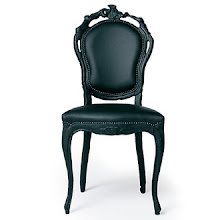
Smoke Series(03)
Baas' graduation piece, Design Academy Eindhoven 1996


A very interesting talk on the disparity of our acceptance of beauty in manufacture (mostly perfectly symmetrical, even and polished) and beauty in nature (uneven, wild and often is complete disarray. Always changing).

Commented on trying to create work that requires no explanation, whose concept is inherent but maybe not apparent and certainly not laboured to its audience.

A delightful walk through Baas's work, Smoke (03), Treasure (05), Clay (06), Sculpt (07), Tha Chankley Bore (08), The Shanghai Riddle (08), Standard Unique (09), Real Time (09) and his most recent commission by New York collector Lindemann.

My highlight was most definitely his response to the question:
Are you an artist or a designer?

An honest and unabrasive:
'I don't give a shit about the answer of this question.
You can stretch anything anywhere you want.
I don't see the reason why I would ask it.
I make things.
You can talk about it or you can not talk about it and spend the time to play some football or something.'

Bloody great.


Clay (06)

Tuesday, October 13, 2009

Contemporary Ceramic Design for Meaningful Interaction and Emotional Durability: A Case Study

Citation: Lacey, E. (2009). Contemporary ceramic design for meaningful interaction and emotional durability: A case study. International Journal of Design, 3(2), 87-92.

67. The paper presents a case study of the design of emotionally durable ceramics, which is then applied in real commercial contexts. It illustrates how designers can be inspired by hand crafted unique objects, and how designers in turn can translate some of their qualities for use in mass-produced objects.

‘fewer better things’ (personal communication, February, 2007),
for example ceramic objects which transcend the fast moving home-ware trends and remain loved and relevant over extended time. As observed through personal experience, value beyond monetary cost can be assigned to individual handmade products. It is this uniqueness and integrity of material and process seen in handmade crafts that are hoped to be imbued into commercial products in order to make them emotionally durable.

How could one design ‘unique’ pieces that would be valued on a personal level and which could also be industrially mass produced? The notion of integrity is central in this contradiction.

89. The design explorations resulted in the main proposition that design (or craft) features that take the user on a journey contribute to meaningful experience. In the case of hand-made or hand-finished products, visual clues, such as an unglazed
area or an irregularity in form, can lead to tactile investigation of these unique or seemingly unique qualities. It is this level of consciousness required to explore the object in detail that is the aim of the author’s own designs, in hopes of enhancing the user’s initial experience of an object in a way that encourages one to
return to explore the details again and again.
The surprise element described in the experience of the TAC01 can be seen as a cue to explore the product.

In his book Emotionally Durable Design (2005), Jonathan Chapman proposes that we might address issues of sustainability through exploring product lifespan and relating this to peoples’ emotional needs. He describes a ‘utopian futurescape’ where design is derived from “profound and sophisticated user experiences that penetrate the psyche over time” (p. 83).

90. The reflective answers provided levels of personal attachment that the designer cannot (or perhaps should not) try to contrive. The user autonomy, which is asserted here, is evidently connected to the very individual, social, cultural and emotional
value of the object and perhaps suggests that the designer should look at ways in which to leave space in the design for the consumers’ own interpretation, rather than design a piece to be used only as directed by the designer. For example, enabling
the user to personalize an object or adapt the way it is used. This concept is illustrated in the following section.

Creating the perfect ceramic : The first was to add an element of surprise that
would nudge the user into exploring the object consciously. The second was to incorporate a unique element that would give the object an individual identity, again to nudge the user into closer inspection. The third was to allow for a level of interaction which could be personal and which was beyond simply drinking tea or
coffee.

Switch! Energy Ecologies in Everyday Life

Citation: Mazé, R., & Redström, J. (2008). Switch! Energy ecologies in everyday life. International Journal of Design, 2(3), 55-70.

55. There is no single answer to the question of how people should live, nor any silver bullet for solving current ecological problems—and yet, contemporary design must seek ways to think and act in light of emerging environmental challenges. We present here an overview of the Switch! design research program, a continuation of our previous work on how interaction and product design can promote awareness of energy use in everyday life. Extending this approach to a larger architectural and urban scale, Switch! was set up to explore the possibilities of design as an intervention into multiple and interpenetrating technical, material and social systems—or ecologies. In addition to designing materials, objects, and interfaces, Switch! also examines how design can be engaged in staging potential scenarios, narratives and debates.
The design of interventions into energy ecologies and the use of design methods become a platform for exposing existing habits and hidden norms as well as for proposing alternative actions and views. These propositions have been developed through practical experimentation and the materialization of design examples. Central to our investigation is how critical practice enables us to examine and discuss the concepts, strategies and ideologies underlying sustainable design.

With the new challenges presented by climate and energy issues, design must reexamine its role in shaping and changing values— both within the sustainability discourse and within the design practices that impact production and the products that shape
practices of consumption. If we consider that design has had, and continues to have, a profound power to influence consumer and societal values, then we might renew its role in light of current problematics of mass-production and (over)consumption. We
might rethink how the values embodied in products influence beliefs and behaviors, and how systems of objects, service ecologies and social ecologies influence user relationships with design products throughout their lifespans and lifecycles.

design can influence multiple actions and interactions that accumulate over time

56. Inspired by contemporary thinking in material culture and the sociology of technology, Switch! considers design as an intervention into multiple and interpenetrating technical, material, and social systems—or ecologies. Although the power to control or to design and implement new systems and structures at such
a scale may not fall to design research, we can use design as a vehicle for exposing, debating and intervening in values within these complex ecologies, thereby introducing new openings for awareness and change.

Design is often said to be about “value creation,” referring to the power of design to effect meaningful and valuable experiences for consumers as well as material and brand value for clients and stakeholders. Operating on behalf of producers, design is bound
up with larger projects of increasing economic and symbolic capital. With respect to consumption, design is no longer, if it has ever been, solely about satisfying the basic human needs of an individual or a society, but also about creating needs and even
manufacturing desire (Forty, 1986). Historically, this persuasive power of design has been employed in service to expanding consumption—indeed, design came into being at a particular stage in the history of capitalism, bound up with economies of industrial production and mass-consumption.

Given this history, as well as contemporary awareness of some of the undesirable ecological side-effects of previous modes of production and consumption, perhaps it is no wonder that design has often been seen as part of the problem within the discourse on environmentalism. In response, diverse strategies are collecting under the umbrella of sustainable design, ranging from those trying to minimize negative environmental costs to those trying to solve environmental problems. Much effort has been directed
towards improving existing manufacturing systems, increasing the energy efficiency of processes and products, and promoting green consumption. Others move away from the production of and desire for the “new,” towards the endurance, reuse and sustainment
of existing things, or towards continuing and closed systems of production.

Given the difficulty of foreseeing the future consequences of design decisions, it is possible that things we regard as solutions may produce further problems elsewhere
in the world or later on in time. Humanitarian and environmental interests intersect and even compete within sustainable design, pointing to larger historical and philosophical tensions between ideas of nature and culture, progress and change, individualism and collectivism.

57. Engaging with the issues bound up in environmental discourse and sustainable design means, to some extent, engaging with the complexity of causes and effects, problems and solutions. Designers must consider the potential consequences and impact
of their proposals in order to, at least to some extent, anticipate potential problematics and emerging issues. Propositions must also be located in a world already densely-populated with previous design “solutions” to human needs and desires.

66. We believe that design research offers the possibility to act as a sort of curation in the development of a mature debate about environmental issues by materializing diverse—and perhaps even conflicting—values in forms and formats that people can relate to and participate in.

68. Sustainable design must incorporate and encourage mechanisms for critically reflecting on the role and responsibility of design in shaping human experience and changing social conditions. Rather than attempting to preserve the status quo or
return to a previous state of affairs, this requires us to acknowledge the inevitably productive and persuasive power of design in creating the “new.” Besides new solutions—or problems—this might also include the formation of reflective practitioners and alternative products. As an “art of staging,” design might meet
sustainability in “problem-finding” within existing and emerging paradigms, opening up questions to an expanded range of interests and stakeholders. Critical practice might be brought to bear on sustainable design not as simplification but diversification of the ways in which we might understand the challenges at hand. In such terms, design practice might employ research and theory in order to open up the way for constructive engagement in complexity.